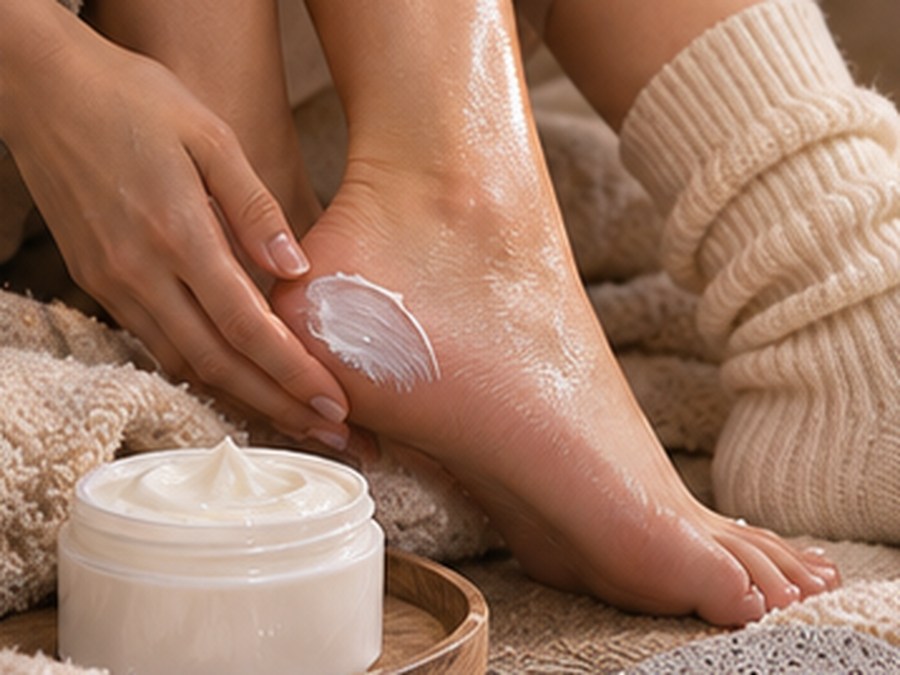
The Physiology of Plantar Hyperkeratosis & Stratum Lucidum
The skin on the soles of human feet contains a unique histological layer not found elsewhere on the body: the stratum lucidum. Plantar skin is completely devoid of sebaceous oil glands, relying entirely on sweat (eccrine glands) for surface hydration.
Subject to continuous mechanical pressure and friction from standing and walking, keratinocytes accelerate production, creating an abnormally thick stratum corneum (plantar hyperkeratosis). As elasticity drops, the dry callus splits under body weight, forming painful vertical fissures.
The Chemistry of Urea: Osmotic Humectant vs Keratolytic Agent
Urea (carbamide) is a native constituent of human Natural Moisturizing Factor (NMF). Its clinical performance is strictly concentration-dependent:
At concentrations below 10%: Urea functions purely as an osmotic humectant, drawing water into the stratum corneum.
At concentrations between 20% and 40%: Urea functions as a potent keratolytic desmolytic agent. It breaks the hydrogen bonds in hard, compacted keratin proteins, causing rigid callus sheets to soften, swell, and shed naturally without aggressive rasping.