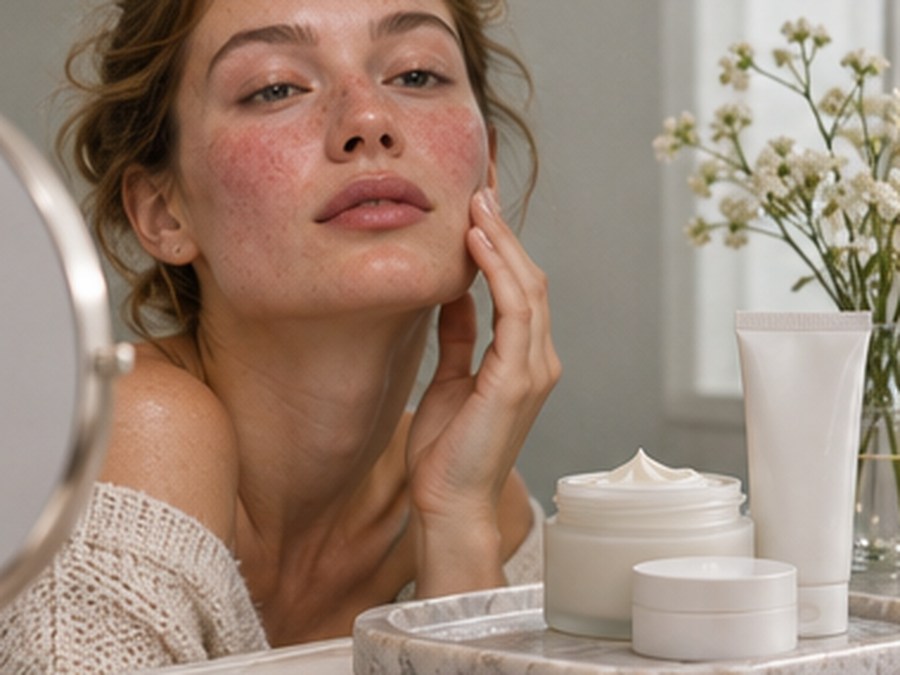
The Editorial Shortlist
Standout Formulas Reviewed by Category & Need
01 · Best overall clinical redness-calming serum
Paula's Choice 10% Azelaic Acid Booster with Licorice
Clinically proven formula with 10% azelaic acid, salicylic acid, and soothing licorice root that visibly calms redness, fades marks, and smooths texture.
Best for: rosacea redness, acne bumps, and evening skin tone.
Check current price on Amazon
02 · Best soothing green botanical corrective gel
SkinCeuticals Phyto Corrective Gel (Fragrance Free)
Lightweight, oil-free calming gel packed with cucumber, thyme, and olive leaf extracts that cools redness and calms reactive micro-capillaries.
Best for: immediate cooling, post-laser flushing, and quiet luxury care.
Check current price on Amazon
03 · Best reparative soothing cica cream
La Roche-Posay Cicaplast Balm B5+
Formulated with 5% panthenol, madecassoside, and prebiotic thermal water to calm burning sensations, flaking, and compromised barriers.
Best for: active redness flare-ups, stinging patches, and dry skin.
Check current price on Amazon
04 · Best ultra-gentle non-foaming lotion cleanser
Avène Tolérance Extremely Gentle Cleanser for Sensitive Skin
Sterile-packaged non-stripping cleanser with 99% natural ingredients that cleanses without water or friction, calming redness instantly.
Best for: hypersensitive skin, zero-rinse cleansing, and rosacea.
Check current price on Amazon
05 · Best 100% mineral calming zinc oxide SPF 46
EltaMD UV Clear Broad-Spectrum SPF 46 (Untinted / Tinted)
Dermatologist-recommended mineral sunscreen formulated with 9% transparent zinc oxide and 5% niacinamide to calm redness and protect sensitive skin.
Best for: daily redness protection, rosacea-prone skin, and acne.
Check current price on Amazon
Formulation & Technique
Mastering Texture, Timing and Placement
The Pathophysiology of Cutaneous Neurovascular Hyper-Reactivity
Redness-prone and rosacea-affected skin suffers from neurovascular dysregulation. Environmental triggers (UV radiation, temperature shifts, emotional stress, alcohol) stimulate TRPV1 (transient receptor potential vanilloid 1) ion channels on sensory nerve endings.
This triggers the release of vasoactive neuropeptides (substance P and calcitonin gene-related peptide / CGRP), causing acute dilation of superficial papillary capillaries. Over time, chronically dilated vessels lose their elasticity, resulting in visible facial telangiectasias (spider veins) and persistent facial erythema.
The Mechanism of Action of 10% Azelaic Acid
Azelaic acid is a naturally occurring saturated dicarboxylic acid that acts as a potent inhibitor of reactive oxygen species (ROS) produced by neutrophils.
It directly downregulates the expression of kallikrein-5 (a serine protease) and cathelicidin antimicrobial peptides (LL-37)—the primary biochemical drivers of rosacea inflammation. By inhibiting this cascade, azelaic acid reduces both background redness and inflammatory papules without thinning the skin.