A practical, considered edit for post-acrylic nail care. Post-Acrylic Nail Care: A Gentle Routine Between Manicures focuses on finish, shape, tools…

Arkely · Nail Ideas

Post-Acrylic Nail Care: A Gentle Routine Between Manicures

As an Amazon Associate we earn from qualifying purchases. Affiliate disclosure

The Product Curation

Top-Rated Products Ranked by Performance

Best Overall Clinical Post-Acrylic Keratin Treatment

CND RescueRXx Daily Keratin Treatment

The clinical gold standard in post-enhancement nail recovery. Delivers bio-active keratin peptides and jojoba seed oil deep into traumatized nail beds, reversing peeling and eliminating white surface spots within 1 to 4 weeks.

Best for: Paper-thin, bendy, post-acrylic or post-dip nails recovering from aggressive e-filing.

Check current price on Amazon
Best Lipid-Restoring Cuticle Oil

CND SolarOil Nail & Cuticle Care

A synergistic blend of naturally light sweet almond oil, jojoba oil, and antioxidant vitamin E. Drives moisture deep into the nail matrix and surrounding periungual folds, restoring flexibility and resilience.

Best for: Daily, non-greasy lipid restoration after harsh acetone soaks.

Check current price on Amazon
Best Gentle Etched Czech Glass File

Bona Fide Beauty Czech Glass Nail File

Made from genuine Bohemian tempered glass with micro-fine abrasive grit. Smooths fragile, paper-thin edges without shredding delicate keratin layers, permanently preventing snags and splits.

Best for: Gentle shaping on weakened, fragile post-enhancement nails.

Check current price on Amazon
Best Breathable Protective Fortifier

Kur by Londontown Restorative Nail Cream

A deeply replenishing cream formulated with Florium Complex, evening primrose oil, and chamomile. Massaged into bare nail beds overnight to replenish lost sebum and moisture stripped by salon chemicals.

Best for: Intense overnight hydration and restoring natural nail shine.

Check current price on Amazon
Best Non-Toxic Fortifying Shield Base

Ella+Mila First Aid Kiss Nail Strengthener

A clean, 17-free strengthening polish formulated with vitamin E and botanical extracts. Creates a protective, flexible barrier over sensitive nail beds, preventing painful bending without toxic formaldehyde.

Best for: Protecting sensitive bare nails while transitioning back to natural manicures.

Check current price on Amazon

Quick Summary

Understanding the Essentials in Sixty Seconds

Mastering the Ritual

Professional Principles for Flawless Results

Post-Acrylic Trauma: What Actually Happens to the Keratin Bed

The post-acrylic nail dilemma is rarely caused by the acrylic polymer itself; rather, it is the result of mechanical salon preparation and aggressive removal. To ensure acrylic adheres for weeks, nail technicians frequently use 80-to-100-grit coarse files or high-speed e-file sanding bands to rough up the nail plate, grinding away the tough dorsal keratin layer.

During removal, 100% pure acetone soaks strip away every trace of natural squalene, cholesterol, and moisture from the remaining intermediate and ventral nail layers. Furthermore, scraping softened acrylic with metal pushers shears off additional onychocyte cells, leaving behind a paper-thin, sensitized nail plate that bends backward at the slightest touch.

The Rehabilitation Window: Rebuilding the Lipid Matrix

The human fingernail takes between 4 to 6 months to completely regenerate from the germinal matrix located beneath the proximal cuticle fold to the free edge. During the first 4 to 6 weeks post-removal, the priority is not making nails 'hard'—it is making them flexible and water-resistant.

Keratin is naturally hygroscopic: bare, damaged nails absorb up to 30% of their weight in water when you wash your hands or shower. This constant swelling and contracting (hydral fatigue) causes remaining layers to delaminate and flake. Saturating the nail bed multiple times daily with biomimetic jojoba oil displaces water and restores the inter-cellular lipid glue holding keratin together.

The Strategic Filing Protocol: Keep Them Short and Rounded

When nails are thin and compromised, maintaining long square or stiletto tips creates immense mechanical leverage against the weakened nail bed. A minor bump against a desk can rip the nail down into the vascular pink bed, causing painful subungual hematomas.

Trim natural nails down to the fingertip perimeter and shape them into a soft squoval or rounded contour using a Czech etched glass file. Filing should always be executed in a single fluid direction—never saw back and forth—to seal the delicate distal keratin margin and prevent snagging on sweaters.
What to Look For

Crucial Formulation & Compatibility Factors

The Routine Guide

How to Work This Seamlessly Into Your Regimen

  1. Trim weakened nails down close to the fingertip using sharp clippers, then gently smooth the free edge with a Czech etched glass file.
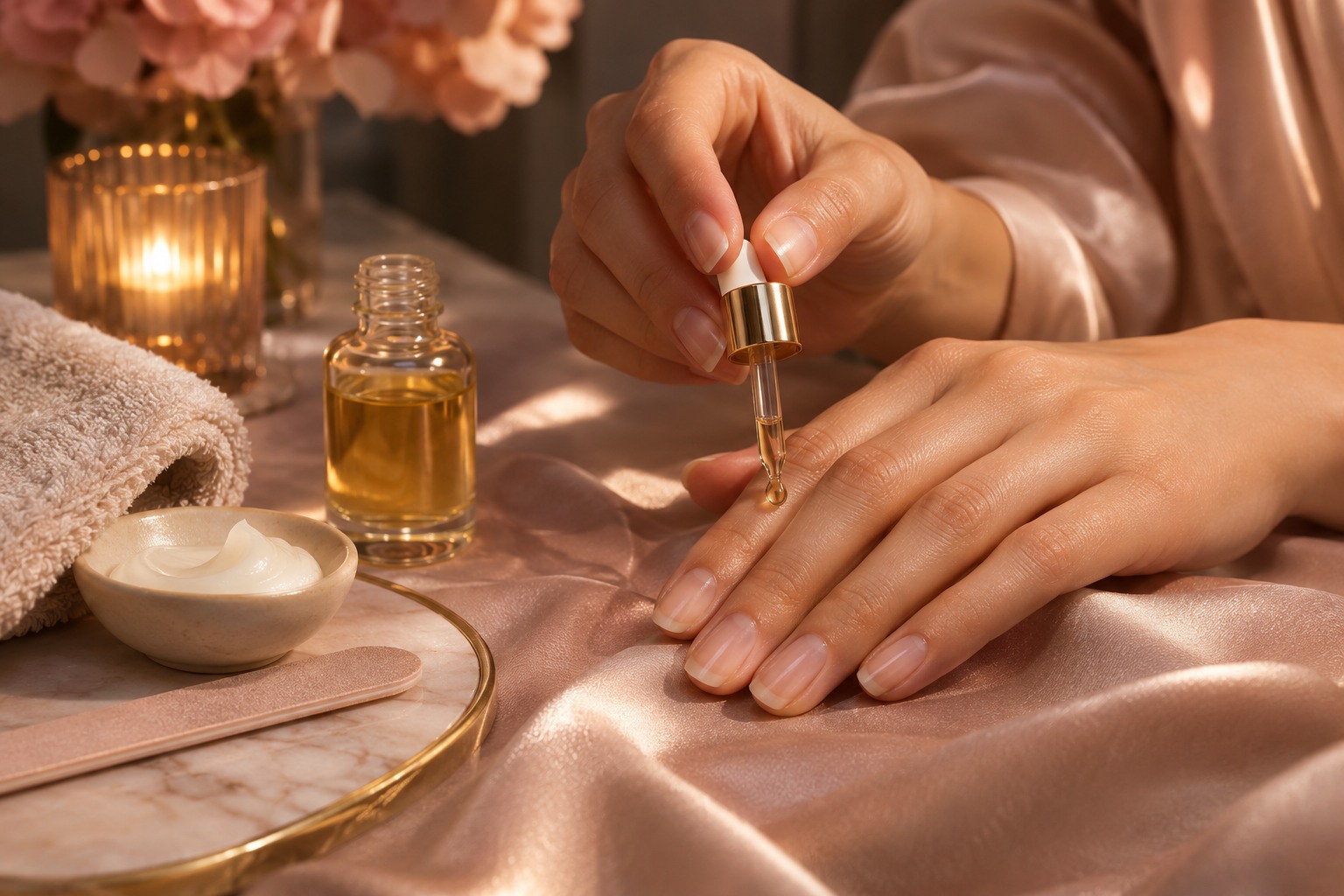
  2. Apply a generous drop of CND RescueRXx or pure jojoba oil directly to each bare nail plate, massaging into the cuticles and under the free edge for 60 seconds.
  3. Wear waterproof rubber gloves whenever washing dishes, cleaning, or coming into contact with domestic household detergents.
  4. Repeat cuticle oil application at least 3 to 4 times daily, especially immediately following hand washing and right before sleep.
Pro Tip & Recommendations Formulations, packaging, and availability are subject to change. Verify current details directly on Amazon.

The Clear Standout

Our Unanimous Top Pick for Quality & Results

Best Overall Clinical Post-Acrylic Keratin Treatment

CND RescueRXx Daily Keratin Treatment

The clinical gold standard in post-enhancement nail recovery. Delivers bio-active keratin peptides and jojoba seed oil deep into traumatized nail beds, reversing peeling and eliminating white surface spots within 1 to 4 weeks.

Best for: Paper-thin, bendy, post-acrylic or post-dip nails recovering from aggressive e-filing.

Check current price on Amazon

Common Inquiries

What Readers & Enthusiasts Ask Most Often

Why do my nails hurt and throb after getting acrylics taken off?

Nail throbbing occurs when aggressive e-filing grinds away too many keratin layers, leaving only a thin, porous membrane over the highly vascular and nerve-dense nail bed. As acetone evaporates and leaves the tissue parched, nerve endings become hypersensitive. Applying soothing jojoba oil relieves tension.

Can I put regular nail polish on my nails while they are recovering from acrylics?

Yes! Wearing 2 coats of a non-toxic, 10-free fortifying base coat acts as a protective external splint that shields bare nails from water absorption and physical bending. Just avoid using acetone to remove it—use an acetone-free remover.

How long should I wait before getting acrylics or gel extensions again?

Dermatologists and master nail educators recommend giving your nails a break of at least 8 to 12 weeks. This allows the nail matrix to produce a thick, healthy new keratin plate covering at least half of the nail bed before applying new artificial enhancements.