A practical, considered edit for peach vs. bisque color correctors. Peach vs. Bisque Color Correctors: How to Neutralize Blue and Purple Under-Eye…

Arkely · Makeup

Peach vs. Bisque Color Correctors: How to Neutralize Blue and Purple Under-Eye Shadows

As an Amazon Associate we earn from qualifying purchases. Affiliate disclosure

Editor's Curated Selection

The Definitive Standouts Worth Investing In

Best Overall Iconic Color Corrector

Bobbi Brown Under Eye Corrector

The industry benchmark potted corrector available in precision Bisque and Peach undertone spectrums. Its emollient, waterproof formula neutralizes stubborn shadows instantly without caking or emphasizing fine lines.

Best for: High-coverage, pigmented color neutralization and long-wearing waterproof under-eye prep.

Check current price on Amazon
Best Lightweight Serum Corrector

Charlotte Tilbury Magic Vanish Color Corrector

A featherlight buttery compact infused with flavonoids, carnauba wax, and microspheres that optically blur shadows. Glides like silk over dry under-eyes to cancel darkness while smoothing texture.

Best for: Dry or mature under-eye skin needing silky blurring and zero heaviness.

Check current price on Amazon
Best Clean Skincare-Infused Brightener

Live Tinted Huestick Multi-Use Color Corrector

A versatile demi-matte crayon formulated with hyaluronic acid, squalane, and vitamins C and E. Neutralizes under-eye darkness, hyperpigmentation, and dark spots effortlessly across diverse complexions.

Best for: Medium, olive, and deep skin tones needing rich apricot-peach correction.

Check current price on Amazon
Best Budget Liquid Under-Eye Corrector

e.l.f. Camo Color Corrector

A long-lasting, hydrating liquid corrector packed with hyaluronic acid and rose flower water. Features a soft doe-foot wand that deposits targeted micro-droplets of peach or pink to instantly cancel under-eye exhaustion.

Best for: Budget-conscious makeup routines and lightweight daily liquid blending.

Check current price on Amazon
Best Clinical Brightening Eye Serum

Smashbox x BECCA Under Eye Brightening Corrector

Infused with Backlight Technology and ultra-fine luminescent pearls that deflect light away from dark circles. Vitamin E nourishes delicate skin while rich peach/fair hues eliminate purple discoloration.

Best for: Luminous, dewy, light-reflective under-eye radiance without glitter.

Check current price on Amazon

Key Notes & Context

What Makes This Topic Essential Right Now

Formulation & Technique

Mastering Texture, Timing and Placement

Color Theory Mechanics: Opposites on the Subtractive Color Wheel

Color correction relies on the foundational optical physics of the subtractive color wheel. When two complementary hues directly opposite one another are layered, they cancel each other out, resulting in a neutral chromatic gray or beige that requires minimal coverage to conceal.

Under-eye darkness is caused by two physiological factors: thin eyelid skin revealing deoxygenated capillary blood vessels beneath (which appear blue and purple), or post-inflammatory melanin hyperpigmentation (which appears brown and olive). Attempting to mask these dark tones with a light flesh-toned concealer merely mixes white pigment with dark tones, producing an unflattering ashy, gray halo.

Peach vs Bisque: Decoding Your Underlying Discoloration

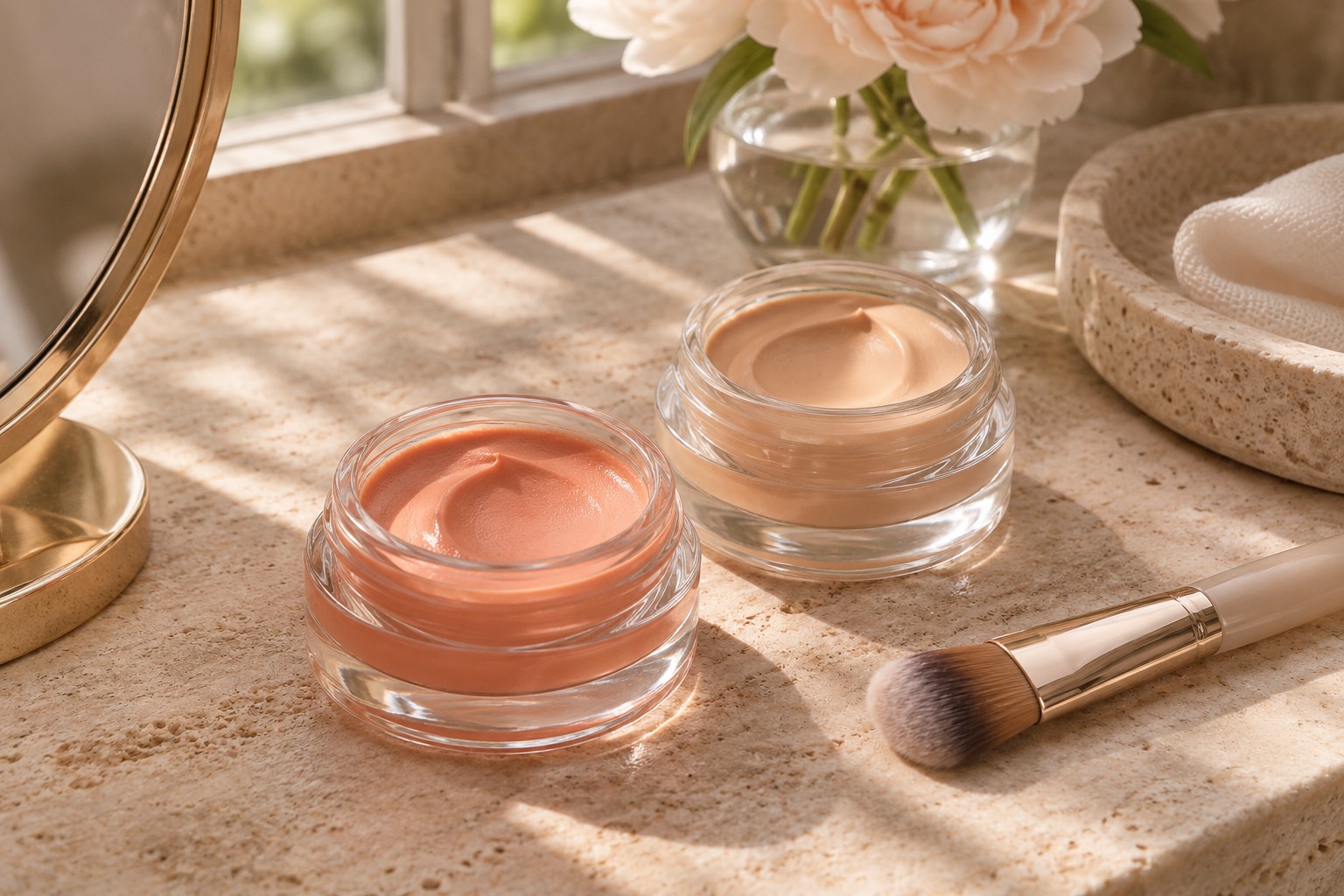
The distinction between Peach and Bisque comes down to primary color dominance. Peach correctors feature a predominant yellow-orange base. Because orange is the direct optical opposite of blue on the color wheel, peach is engineered to neutralize cool blue, cyan, and slate-colored veins. Peach is especially effective on light-medium to deep complexions.

Bisque correctors, conversely, possess a balanced pink-peach base. Because yellow-pink sits directly opposite purple and violet, bisque is designed to eliminate deep violet shadows, red capillary pooling, and brownish discoloration. Bisque is the ideal choice for porcelain, fair, and light skin tones where a strong orange peach would leave an obvious orange stain.

The 'Micro-Dot' Application Technique: Avoiding Creasing and Mud

The most common mistake when using color correctors is treating them like foundation and spreading them across the entire under-eye area. Corrector should only be applied strictly where the darkest shadows pool—typically the deep inner hollow near the tear duct and the blue trough of the tear trough line.

Deposit a pinhead-sized amount using a small synthetic detail brush and gently tap with your ring finger until the edges melt into bare skin. The dark purple or blue hue will instantly neutralize into a soft neutral tone. Then, tap a sheer skin-toned concealer directly over the top to match your face perfectly.
Vetting Guide

Ingredients, Textures & Packaging Worth Prioritizing

Ritual & Protocol

How to Apply for Flawless All-Day Wear

  1. Hydrate the under-eye area with a lightweight, fast-absorbing caffeine or hyaluronic eye cream and let dry for 2 minutes.
  2. Dip a fine synthetic flat brush into the corrector and place 2 to 3 micro-dots strictly inside the dark inner hollow and tear trough groove.
  3. Use the pad of your ring finger to gently tap and melt the pigment into the skin; do not drag or wipe.
  4. Apply a lightweight concealer that matches your exact skin tone directly over the neutralized area, setting with a micro-fine dusting of translucent powder.
Pro Tip & Recommendations Formulations, packaging, and availability are subject to change. Verify current details directly on Amazon.

Our Top Recommendation

The Most Versatile Performer for Every Routine

Best Overall Iconic Color Corrector

Bobbi Brown Under Eye Corrector

The industry benchmark potted corrector available in precision Bisque and Peach undertone spectrums. Its emollient, waterproof formula neutralizes stubborn shadows instantly without caking or emphasizing fine lines.

Best for: High-coverage, pigmented color neutralization and long-wearing waterproof under-eye prep.

Check current price on Amazon

Expert Answers

Solutions to Common Texture & Layering Questions

Why does my color corrector make my under-eyes look orange under my concealer?

This indicates either using too deep of a peach shade for your skin tone (switch to a softer bisque or salmon), applying too much product, or using a concealer that lacks sufficient opacity to cover the corrector. Use a pinhead amount strictly on the darkest shadow.

Can I wear color corrector alone without concealer over it?

Yes! If you choose a subtle bisque or light peach shade that closely harmonizes with your skin's natural undertones (such as the Smashbox x BECCA brightener), it neutralizes shadows and leaves a rested, natural look with zero foundation.

Should color corrector be applied before or after foundation?

Apply color corrector before concealer and foundation. Neutralizing the discoloration first allows you to use 50% less concealer, preventing heavy, cakey makeup from settling into dynamic eye expression lines.