Polymer Evolution: 1980s Isobutane vs. Modern Aerated Plant Esters
Vintage 1980s hair mousses relied on high concentrations of denatured alcohol (drying agents) and synthetic vinyl polymers (PVP/VA copolymer) propelled by isobutane gas. When applied to hair, the alcohol evaporated rapidly, leaving a rigid, brittle plastic shell over the hair cuticle. Touching the hair shattered this shell, resulting in chalky white dandruff-like flakes and dry, broken strands.
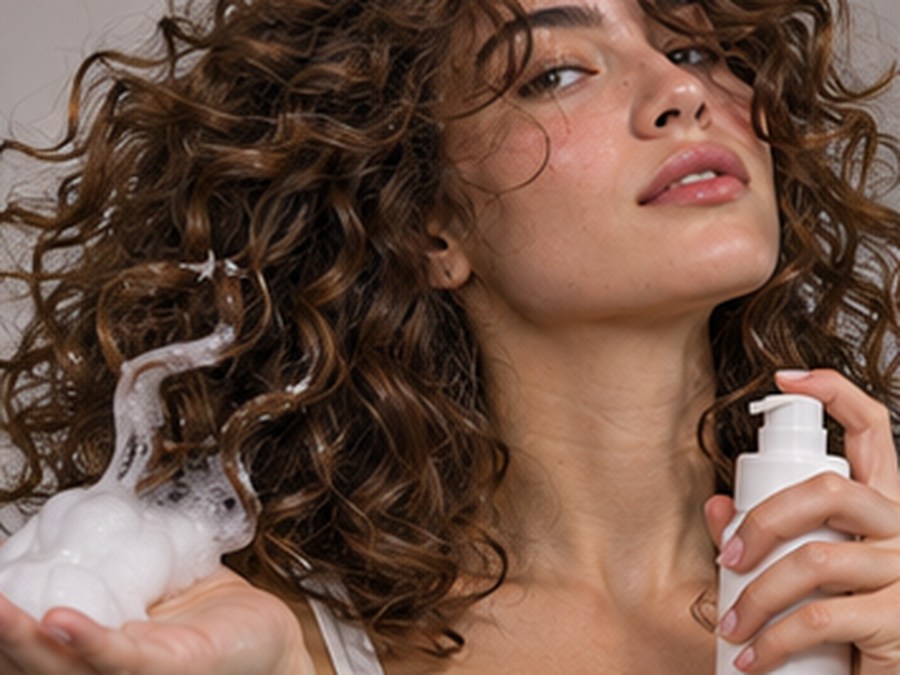
Modern styling foams use mechanical aerators (liquid pumps that mix liquid with room air, requiring zero chemical propellants). Their flexible hold is driven by natural plant hydrocolloids: hydrolyzed cornstarch, agave nectar, and polyquaternium-11. These polymers expand and contract elastomericly with atmospheric humidity, providing 72-hour wave definition that remains completely soft and touchable.
The 'Do Not Touch' Air-Drying Law
The number one reason air-drying results in frizz rather than defined waves is premature touching. While hair is transitioning from wet to dry, hydrogen bonds are reforming in the shape established by your styling foam.
If you run your fingers through your hair, toss it back and forth, or allow a jacket collar to rub against damp strands, you physically tear the drying wave clumps apart, creating instant halo frizz. Apply your foam to damp hair, scrunch upward once, and do NOT touch your hair until it is 100% bone-dry.