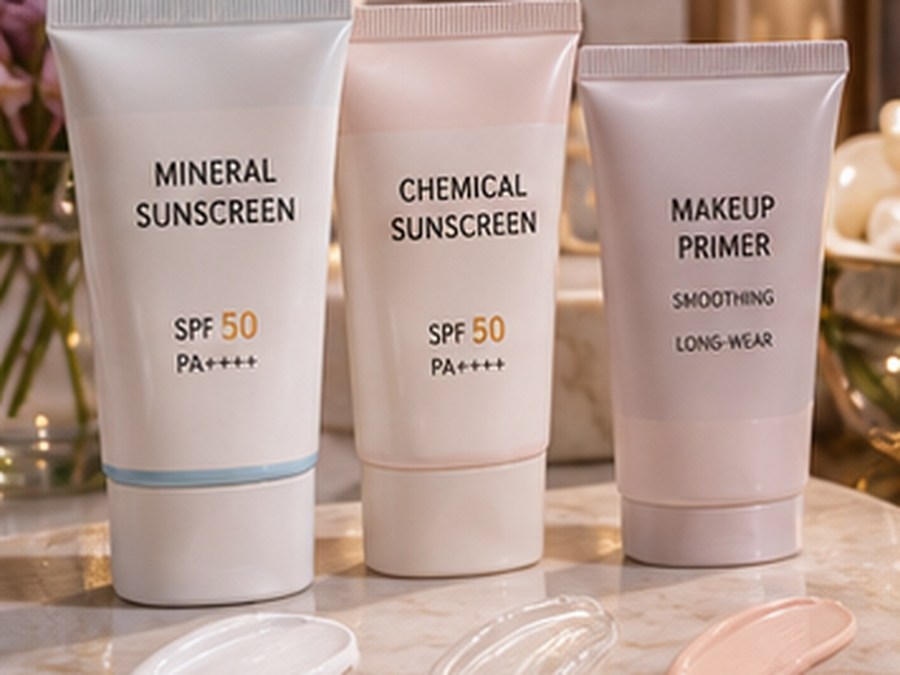
Photoprotection Physics: Reflection vs. Endothermic Absorption
Sunscreen filters operate through fundamentally different thermodynamic mechanisms: 1. Mineral (Physical) Sunscreens: Formulated with inorganic metal oxides (zinc oxide and titanium dioxide). These crystalline particles sit on top of the stratum corneum like microscopic mirrors, reflecting and scattering approximately 85% to 90% of incoming UV photons while absorbing the remaining 10%. Zinc oxide is naturally anti-inflammatory, making it ideal for rosacea.
2. Chemical (Organic) Sunscreens: Formulated with carbon-based aromatic compounds (avobenzone, octisalate, tinosorb). These molecules absorb UV radiation, undergo photochemical isomerism, and convert the harmful radiation into harmless thermal heat that dissipates from the skin. Because chemical filters dissolve completely in the carrier fluid, they leave zero particulate residue on the skin surface.
The Pilling Diagnostic: Resolving Base Clashing
Makeup pilling (tiny balls of product rolling off the face during foundation blending) is an emulsion clash. Sunscreens formulated with high concentrations of volatile silicones (dimethicone, cyclopentasiloxane) form a hydrophobic film.
If you stipple a water-based liquid foundation over that silicone film before the sunscreen has fully dried down, the mechanical friction breaks the emulsion, causing the polymers to ball up. Always follow the 3-Minute Rule: apply your sunscreen, wait 3 full minutes until it is completely touch-dry, and apply foundation using a gentle bouncing motion with a damp sponge.