Microfluidic Chemistry: Why Encapsulated Water Droplets Transform Complexions
Traditional cream and liquid blushes are standard emulsions: pigments are blended uniformly with oils and waxes. While hydrating, the heavy lipid content can sit on top of skin, breaking down underlying foundation or emphasizing enlarged pores on mature cheeks.
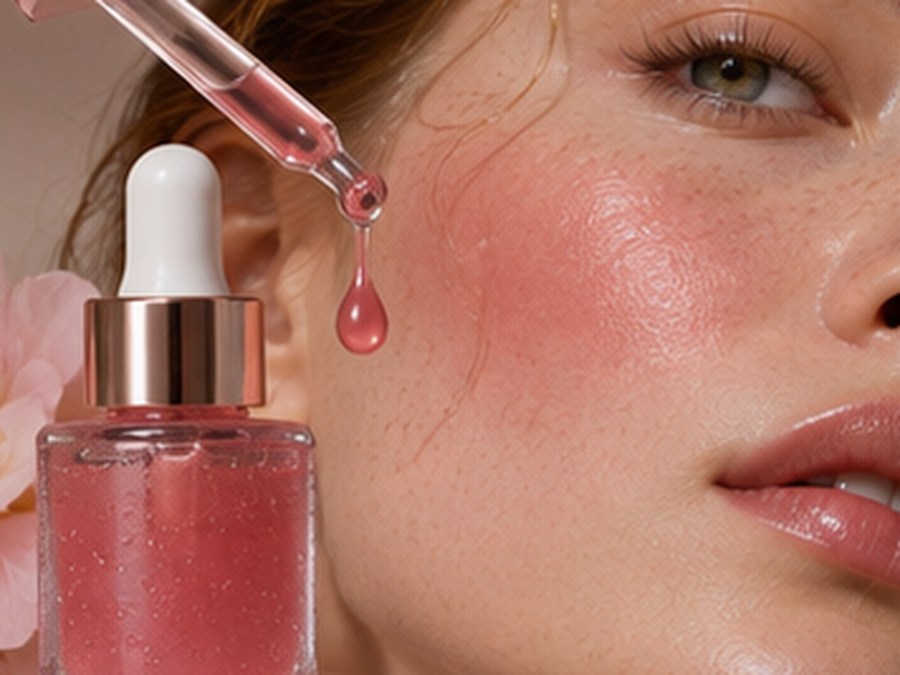
Micro-droplet water blushes (pioneered by Chanel's patented microfluidics) operate on phase-separation physics. Pure cosmetic pigments and soothing plant extracts are encapsulated within microscopic oil droplets (liposomes) suspended inside an ultra-hydrating 75% aqueous serum matrix. As you buff the product across your cheeks, mechanical shear pressure ruptures the micro-capsules.
The water phase instantly quenches parched skin cells, while the released pigment droplets fuse directly with the skin's surface, creating an optical watercolor stain that looks identical to a natural biological capillary flush.
The Palm Burst Technique: Activating the Formula
If you dispense a microfluidic blush directly onto your cheeks and try to blend it with fingers, you may see tiny un-popped beads of pigment that streak across the skin.
The professional technique: pump a single pea-sized drop onto the back of your clean hand. Use a dual-fiber stippling brush or the pad of your finger to swirl the product in small circles for 3 seconds. You will see the clear gel and micro-beads burst into a smooth, luminous watercolor emulsion. Stipple the activated flush onto high cheekbones for an airbrushed finish.