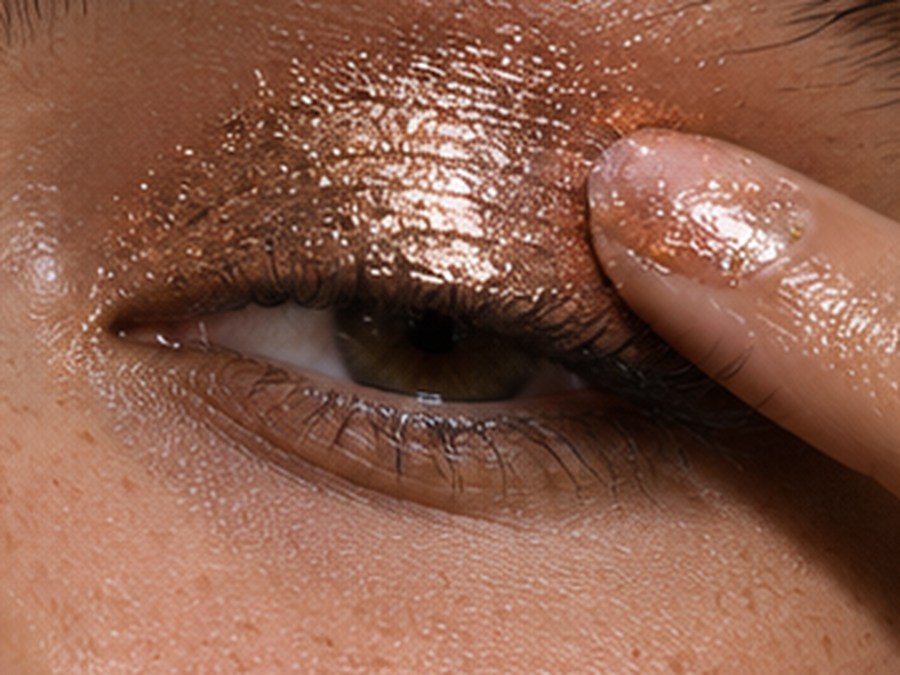
The Physics of Foiling: Specular vs. Diffuse Reflection
When loose mica pigment is applied dry with a fluffy brush, the microscopic platelets lie in random, disorganized orientations across the skin. Ambient light strikes these platelets and scatters diffusely in multiple directions, producing a soft, dusty shimmer.
Foiling alters the optical surface physics. When loose pigment is mixed with a liquid medium (like Inglot Duraline or a setting spray), surface tension pulls the microscopic mica platelets flat, aligning them in a single, continuous, parallel plane. When ambient light strikes this aligned plane, it reflects as a coherent beam (specular reflection), creating the optical illusion of poured, molten liquid metal.
The Palette Mixing Technique: Never Wet the Pot
A fatal mistake made by beginners is dipping a wet brush directly into the jar of loose pigment. Introducing liquid into the container introduces bacteria, hardens the dry powder into unusable clumps, and ruins the product.
Always tap a tiny dime-sized pinch of dry pigment into the upturned plastic cap or onto a stainless steel mixing palette. Dispense 1 drop of mixing medium next to it, and use your brush to gradually pull pigment into the fluid until you achieve the consistency of rich, molten paint.