Polymer Cross-Linking: How Dual-Phase Chemistry Defies Transfer
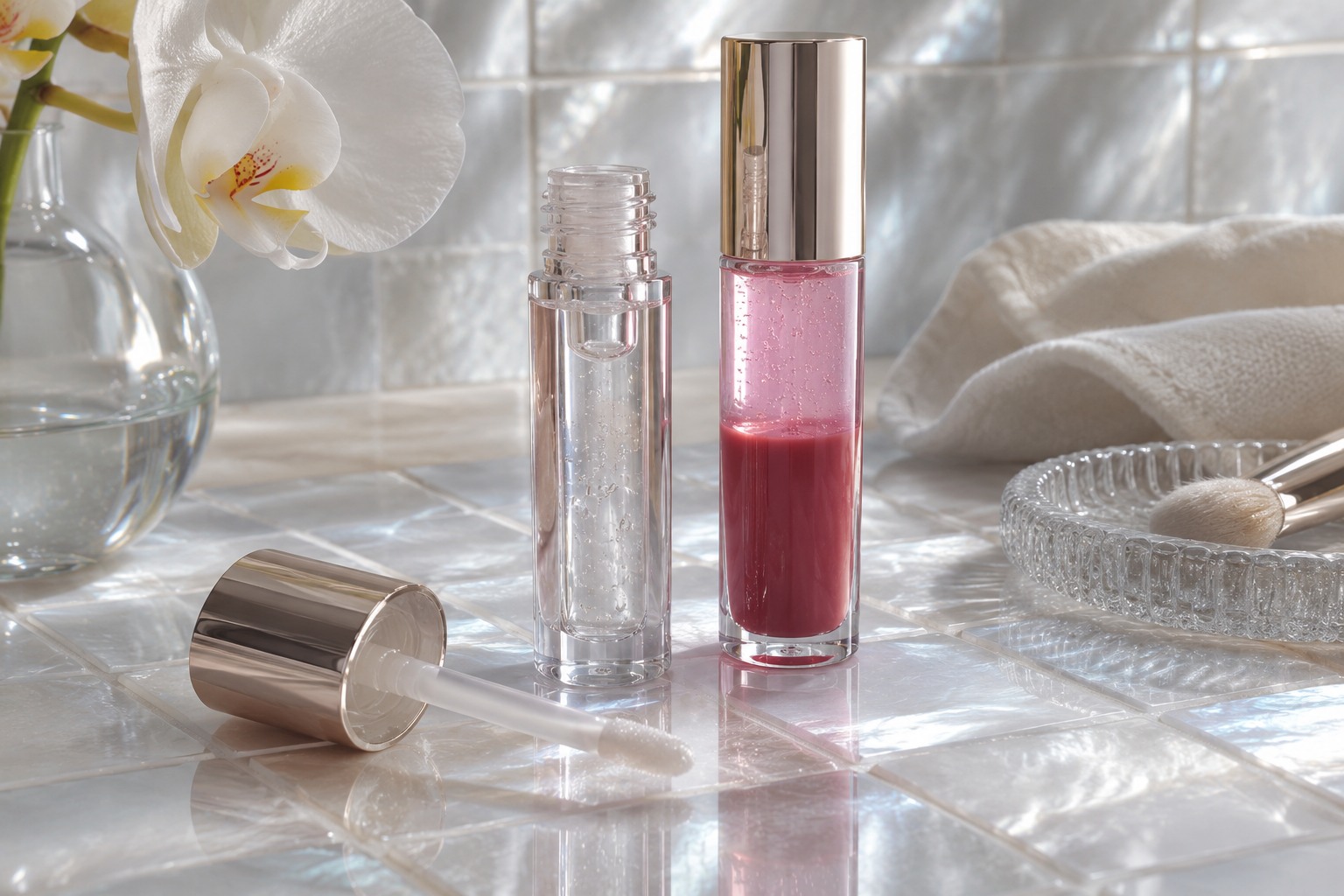
Traditional lipsticks rely on mineral waxes (candelilla, microcrystalline) and castor oil. When your lips touch a glass or napkin, mechanical shear forces displace the wax, transferring color. Dual-phase long-wear systems operate on two immiscible chemical phases: 1. Step 1 (The Color Base): A volatile isoparaffin solvent carrying ultra-concentrated pigments and silicone-acrylates copolymers.
When applied to bare lips, the solvent evaporates in 60 seconds, leaving a flexible, microscopic pigment matrix bonded tenaciously to the keratin surface. 2. Step 2 (The Topcoat): A pure, high-molecular-weight dimethicone fluid. Because dimethicone is completely immiscible with the base polymer, it glides over top without dissolving the pigment, providing high-shine gloss, barrier hydration, and zero transfer.
The 'Keep Your Mouth Open' 60-Second Rule
The single greatest cause of patchy, peeling long-wear lip color is pressing your lips together while the Step 1 base is drying. Wet liquid polymers will adhere to each other, ripping chunks of pigment away and creating an uneven texture.
Apply Step 1 in a single smooth coat, keep your lips slightly parted, and wait a full 60 seconds until the color is completely dry to the touch. Once dry, sweep on the Step 2 clear topcoat generously; your lips will immediately feel silky, comfortable, and completely transfer-proof.