Cationic Exchange Physics: Bentonite vs. Kaolin Clay
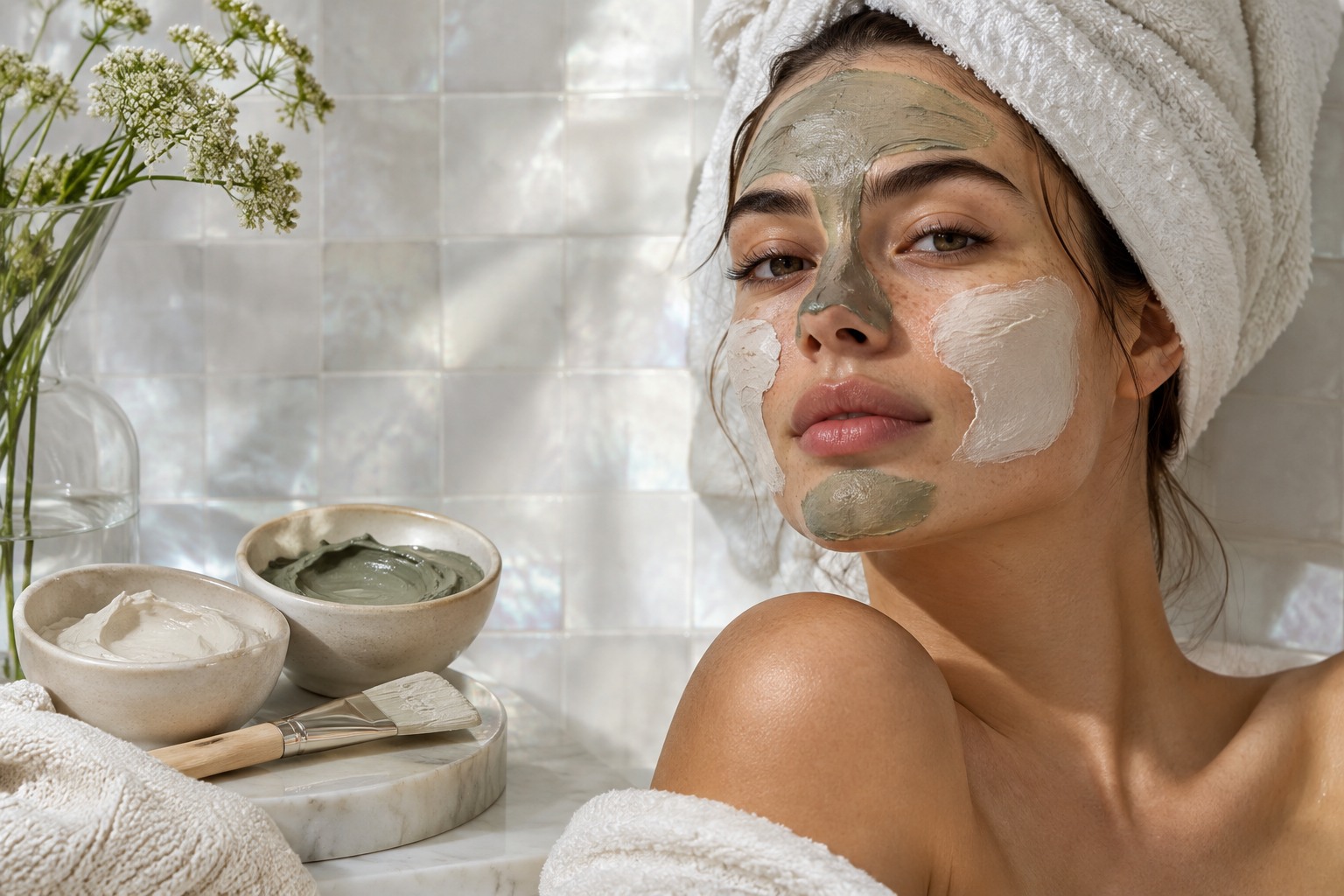
Not all clays work the same way. Bentonite is an aluminum phyllosilicate clay formed from weathered volcanic ash. In the presence of water, bentonite's molecular structure expands dramatically, generating a powerful negative electrical charge (high cation-exchange capacity). This electrical charge acts like a magnet, drawing positively charged impurities, oxidized sebum, and heavy metals out of the pore funnel.
Kaolin is a layered silicate mineral with low shrink-swell capacity and neutral electrical reactivity. Rather than aggressively pulling lipids from the deep dermis, kaolin gently absorbs excess surface sebum and sweeps away dead corneocytes without disrupting inter-cellular lipids, making it exceptionally safe for fragile cheek skin.
The Three Phases of Clay Masking: Never Let It Crack
Clay masks operate through three distinct phases: 1. The Wet Phase: Skin absorbs minerals and botanicals. 2. The Semi-Dry Phase: Capillary circulation accelerates and pores begin to purge. 3. The Dry Phase: The clay completely hardens and cracks.
The cardinal error in skincare is waiting for the clay to dry completely until you cannot move your face. In phase three, the desiccated clay begins pulling intrinsic water directly out of healthy epidermal cells, causing barrier micro-cracks, severe redness, and dehydration lines. Always rinse your clay mask during phase two, while it is still sticky and cool to the touch.