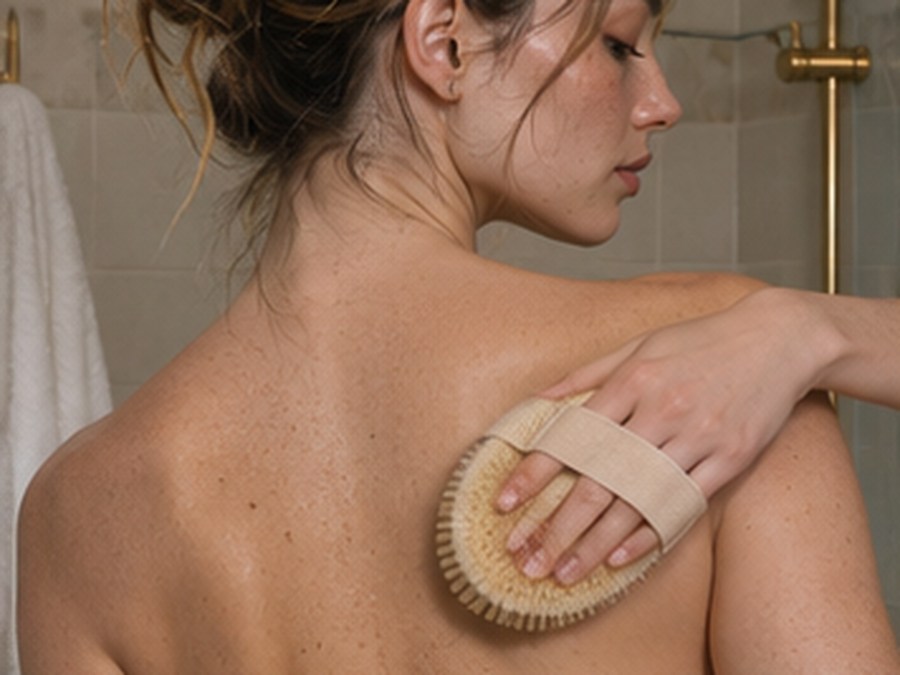
Physiology of Lymphatic Drainage: Unidirectional Flow
Unlike the cardiovascular system, which has the heart as a central muscular pump to circulate blood, the human lymphatic system is passive. Lymph fluid relies entirely on muscle contraction, arterial pulsation, and external mechanical pressure to move cellular waste products toward the major lymph nodes (located in the groin, axillae/armpits, and clavicle).
Dry brushing stimulates superficial lymph capillaries located directly beneath the epidermis. To facilitate drainage, strokes must ALWAYS move inward toward the center of the chest (the thoracic duct). Brushing randomly back-and-forth disrupts valve flow and can increase venous pooling.
Pressure, Frequency & Keratinocyte Renewal
Dry brushing is an invigorating mechanical exfoliant; it should feel stimulating, not painful. Skin should show a light pink flush (erythema) due to capillary vasodilation, but must never be scratched, raw, or red.
Brush for 3 to 5 minutes 2 to 3 times per week on bone-dry skin prior to turning on the shower. Follow your warm shower immediately with a rich ceramide body lotion or sweet almond oil to replenish the stripped lipid barrier.