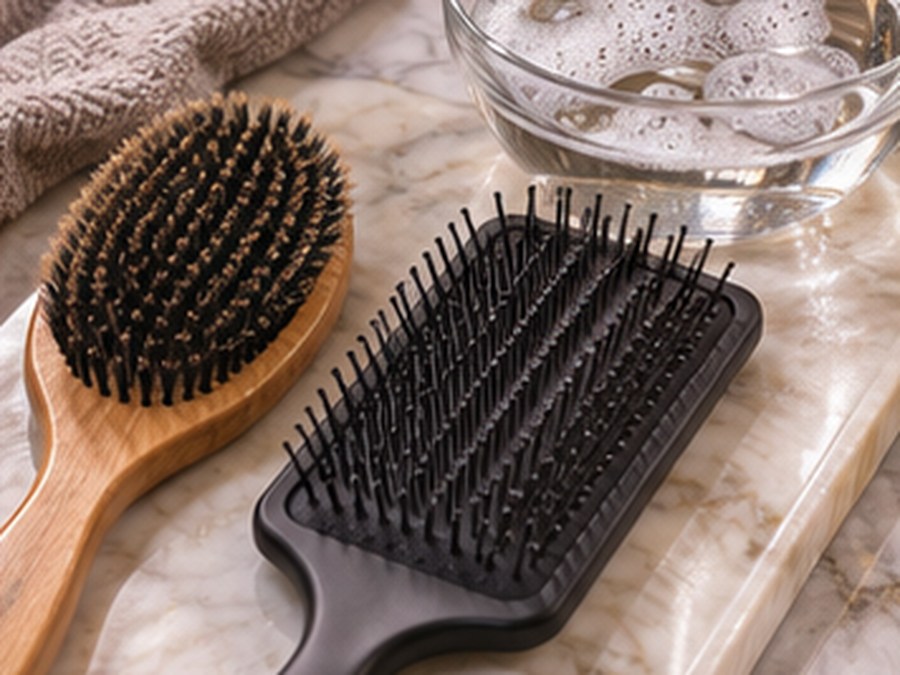
Microbiology of a Dirty Hairbrush: Sebum & Biofilms
Under microscopic evaluation, an unwashed hairbrush harbors millions of colony-forming bacterial units (CFUs), including Staphylococcus epidermidis, as well as fungal spores like Malassezia globosa. Every time you brush, dead stratum corneum flakes and sebum adhere to the bristle shafts, creating a sticky nutrient bed where airborne lint and environmental dust adhere.
Using a dirty brush on freshly shampooed hair undoes your shower wash immediately. The oxidized fatty acids on the bristles transfer back onto your scalp roots, triggering itchiness, dulling light reflection, and accelerating greasiness.
The Safe Washing Protocol for Boar Bristles & Wood
Boar bristles are 100% natural keratin, structurally identical to human hair. Washing them with harsh detergents or scalding water strips their natural cuticles, leaving them brittle and prone to snapping. Furthermore, submerging a wooden brush (such as a Mason Pearson or beechwood paddle) will cause the wood to swell, crack, and harbor mold inside the breathing hole of the rubber cushion.
Always wash with warm (never boiling) water mixed with a dime-sized amount of gentle clarifying shampoo. Dip only the bristles into the soapy water, scrub gently with a toothbrush, rinse bristles down, and dry face-down on a clean towel.