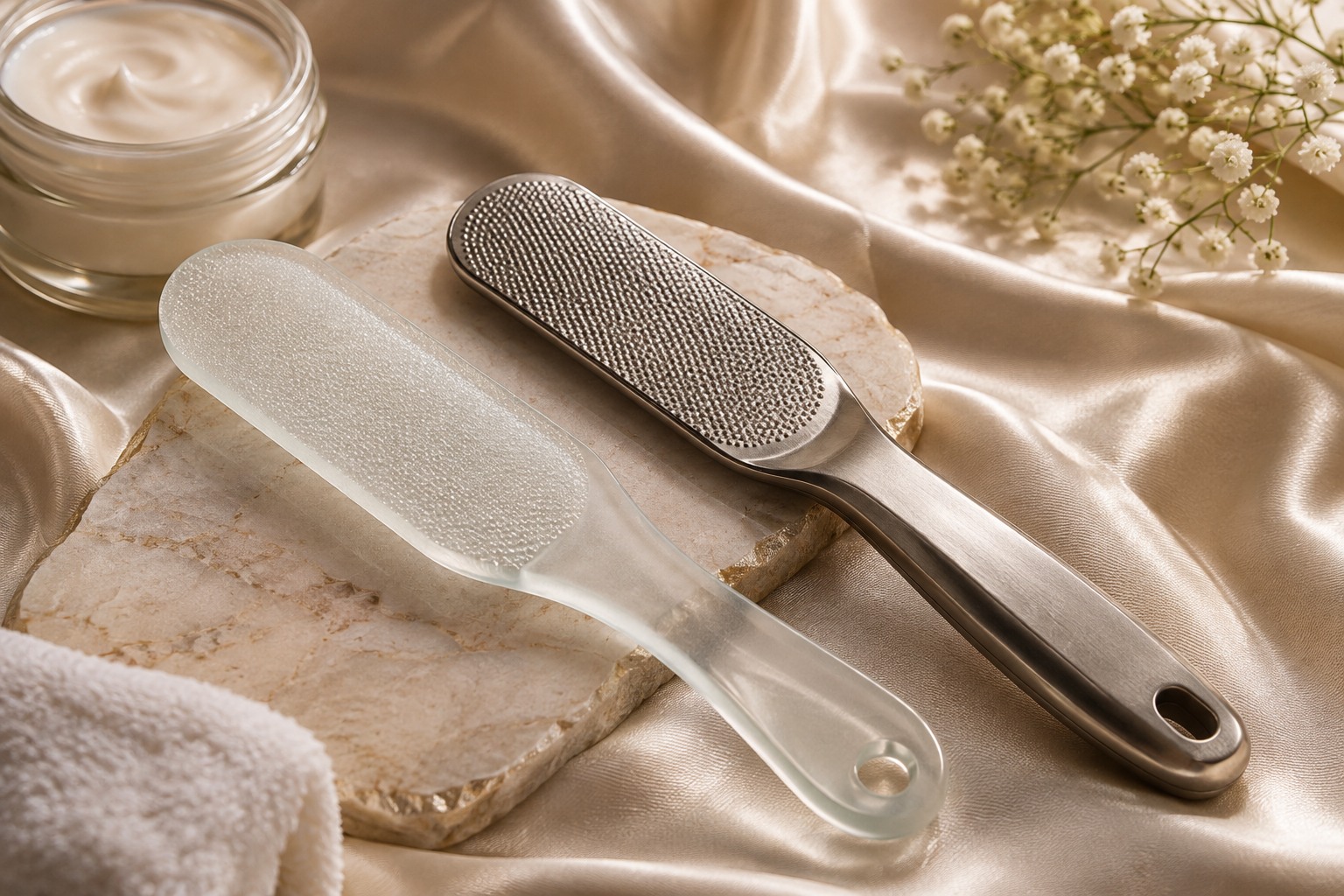
Microscopic Surface Analysis: Micro-Etched Glass vs Blade Stamping
Metal 'cheese-grater' foot files rely on rows of stamped stainless steel mini-blades. While they remove thick calluses in seconds, they slice through keratin unevenly. This creates microscopic fraying and jagged skin edges that catch on silk bedsheets and actually stimulate reactive hyperkeratosis (the skin producing thicker calluses to protect against trauma).
Acid-etched Bohemian glass foot files work through uniform microscopic grit hills and valleys. The glass abrades dead stratum corneum cells into a fine flour-like dust, sealing the perimeter of the skin. Once the dead dry keratin is removed, the glass glides harmlessly over moist, flexible dermal tissue, making accidental lacerations impossible.
Sanitation & Biofilm Prevention
Traditional emery boards and wooden paddles absorb moisture, sloughed skin debris, and bacteria within their porous core, making them impossible to sterilize at home.
Tempered glass files are completely non-porous. Simply washing with warm antibacterial soap and rinsing with 70% isopropyl alcohol destroys fungal spores and bacterial colonies, providing a lifetime of hygienic pedicure care.