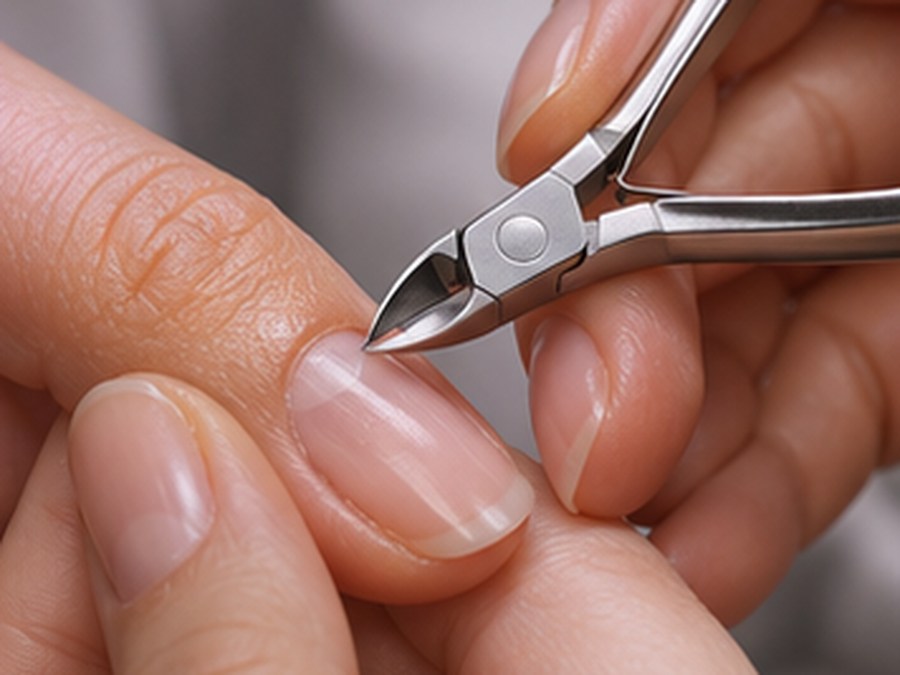
Recommended Selections
Our Top Performing Formulas for Every Routine
01 · Best overall professional cuticle nipper
Tweezerman Rockhard Stainless Steel Cuticle Nipper (1/2 Jaw)
Crafted from durable forged stainless steel with sharp, hand-filed blades that cleanly snip dead cuticle skin without pulling or tearing.
Best for: professional precision, clean salon manicures, and durability.
Check current price on Amazon
02 · Best ergonomic quarter-jaw nipper for beginners
Seki Edge Stainless Steel Cuticle Nipper (S-301)
Handcrafted Japanese steel nipper with an ultra-precise quarter-jaw design and smooth spring action for controlled, safe micro-trimming.
Best for: beginners, tiny hangnails, and precision control.
Check current price on Amazon
03 · Best luxury cobalt steel cuticle nipper
Staleks Pro Expert 20 Cuticle Nipper (Professional)
Made from medical-grade AISI 420 steel with high corrosion resistance and flawless microscopic blade alignment for effortless dead skin trimming.
Best for: professional nail techs and dry Russian manicure prep.
Check current price on Amazon
04 · Best dual-ended cuticle pusher tool
Tweezerman Dual Surface Cuticle Pusher & Cleaner
Contoured spoon end designed to lift dead cuticle tissue off the nail plate cleanly, paired with a tapered cleaner tip for lateral sidewalls.
Best for: safe cuticle lifting before trimming.
Check current price on Amazon
05 · Best instant cuticle softener & remover
Sally Hansen Instant Cuticle Remover Gel
Fast-acting chamomile and aloe formula that softens stubborn, overgrown cuticles in 15 seconds, making mechanical trimming virtually effortless.
Best for: chemical softening and safe cuticle cleanup.
Check current price on Amazon
Editorial In-Depth
The Science, Methodology & Texture Guide
Anatomy 101: The Difference Between Eponychium and Cuticle
The most critical rule in nail care is understanding that the true 'cuticle' is dead, translucent tissue shed from the underside of the eponychium that adheres to the dorsal nail plate.
The living tissue fold at the base of the nail is the eponychium. Cutting living eponychium creates a biological entry point for bacterial paronychia and fungal infections, and causes the body to grow back thicker, callused tissue as a defensive scar response. Only trim dead, detached hangnails.
Jaw Sizes: Full, Half, and Quarter Jaw Mechanics
Cuticle nippers are classified by the length of their cutting edge: Full Jaw (~7mm), Half Jaw (~5mm), and Quarter Jaw (~3mm).
A full jaw covers more area but increases the risk of accidentally nipping healthy living tissue. A Quarter Jaw (3mm) isolates single dead skin tags with surgical precision, making it the safest choice for at-home nail care.
Q&A Clarifications
Expert Guidance for Common Everyday Questions
Should you cut your cuticles at all?
You should only trim dead, detached hangnails and ragged skin tags. Never cut the living skin border (eponychium) at the base of your nail, as this protective seal prevents bacteria from entering your nail matrix.
What is the difference between single spring and double spring nippers?
Double spring nippers feature two interlocking metal arms that provide smoother, more balanced resistance and rebound tension, offering greater control and reducing hand fatigue compared to single spring tools.
How do you sterilize cuticle nippers at home?
After each use, wash the nipper with hot soapy water, wipe the blades with 70% isopropyl alcohol, let air dry completely, and store with the protective silicone jaw cap on to protect the sharp tips from dulling.