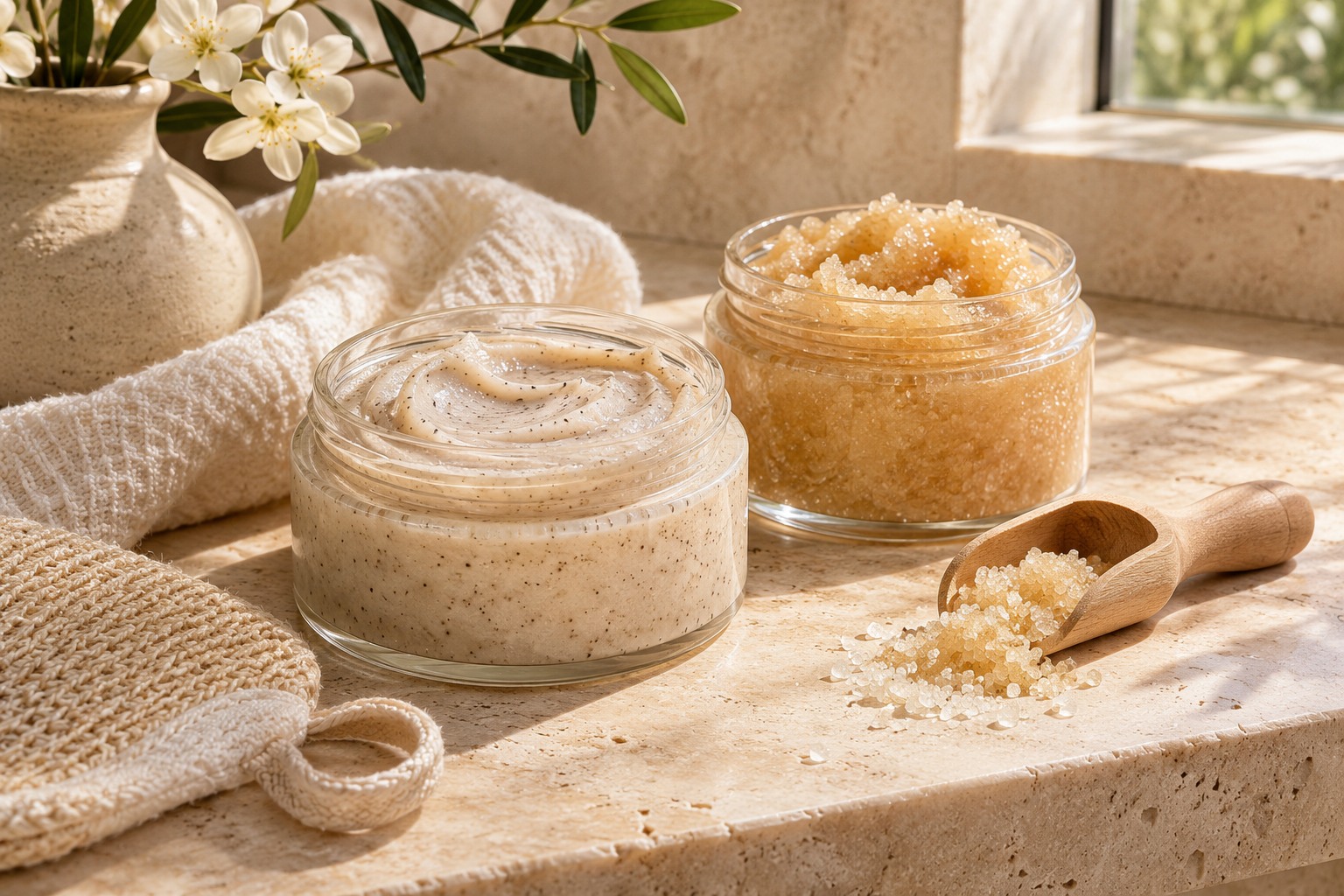
The Colloid Physics of Gommage 'Rolling Noodles'
French for 'to erase', *gommage* relies on a unique physical phenomenon. Formulated with plant cellulose, pectin, or rubber latex along with proteolytic enzymes (like papain or bromelain), the cream is massaged onto dry skin and allowed to semi-dry.
As you rub your palms over the skin, the friction causes the adhesive polymer film to roll up into soft, rubbery little noodles. As these noodles roll across the epidermis, their tacky surface physically lifts dead corneocytes and surface impurities via mechanical adhesion, with zero abrasive scratching of the living lipid barrier.
When to Choose Sugar over Gommage
While gommage is gentle and sublime for reactive skin, it lacks the dense mechanical shearing force needed to soften thick, calloused stratum corneum on heels, rough elbows, and strawberry-textured shins.
For thick, dense skin areas or 24 hours before applying self-tanner, a crystalline sugar scrub is vastly superior. The spherical sucrose granules dissolve gradually under warm water, providing powerful initial exfoliation that melts into gentle hydration.